





The best sleep supplement depends on why your sleep is off. Melatonin (a hormone that signals to your body that it is night) is useful for timing problems like jet lag, but it is prescription-only for most Australians. For everyday wind-down support, ingredients such as magnesium, glycine and L-theanine have a growing body of research, and they are available without a script.
Why are so many Australians looking for help with sleep?
Poor sleep is one of the most common health complaints in Australia. Research commissioned by the Sleep Health Foundation found that around four in ten Australian adults experience inadequate sleep, whether that is too little of it or sleep that does not leave them feeling restored.
Most adults need seven to nine hours a night, according to National Sleep Foundation recommendations. Stress, screens, shift work, late training sessions and caffeine all chip away at that window.
What does a sleep supplement actually do?
A sleep supplement does not switch you off like a sedative. The ingredients discussed below work more subtly, by helping the nervous system settle, supporting the body's own sleep signals, or making it easier to drift off once you are in bed.
That means supplements work best alongside the basics:
- A consistent bedtime and wake time, including weekends
- A dark, cool bedroom
- Less screen time and bright light in the hour before bed
- Caffeine kept to earlier in the day
If poor sleep has lasted more than a few weeks, or you snore heavily or wake gasping, speak with your GP. These can be signs of a sleep disorder that needs proper assessment.
How does melatonin work, and can you buy it in Australia?
Melatonin is a hormone made by the pineal gland (a small gland deep in the brain) as light fades in the evening. It acts as a timing signal rather than a sedative: it tells your body clock that night has arrived, which is why it is most useful when that clock is out of sync, such as after long-haul travel.
Why is melatonin prescription-only in Australia?
Unlike the US, where melatonin gummies line supermarket shelves, Australia regulates melatonin as a medicine. Under the TGA's Poisons Standard, most melatonin products are Schedule 4, meaning you need a prescription from a doctor.
There is a narrow exception. Pharmacists can supply 2mg modified-release melatonin tablets without a script, but only to adults aged 55 and over for the short-term treatment of primary insomnia.
Is imported melatonin a good idea?
Buying melatonin from overseas websites comes with a real quality risk. A study in the Journal of Clinical Sleep Medicine tested 31 melatonin supplements and found actual melatonin content ranged from 83% less to 478% more than stated on the label.
If you think melatonin could help you, the safest route is a conversation with your GP or pharmacist. For everyday wind-down support, the ingredients below are a practical, melatonin-free alternative.
Does magnesium help you sleep?
Magnesium is an essential mineral involved in over 300 enzymatic reactions in the body, including nerve signalling and muscle relaxation. It helps regulate GABA (the brain's main calming neurotransmitter, which quietens nerve activity), which is why it is closely linked to winding down.
What does the research say about magnesium and sleep?
The evidence is promising, though most of it comes from older adults. In a randomised controlled trial published in the Journal of Research in Medical Sciences, older adults with insomnia who took magnesium for eight weeks reported better sleep efficiency and fell asleep faster than those on a placebo.
A 2021 systematic review in BMC Complementary Medicine and Therapies found magnesium reduced the time taken to fall asleep by around 17 minutes on average, while noting that larger, higher-quality trials are still needed.
Are Australians getting enough magnesium?
Many are not. According to the Australian Bureau of Statistics' Australian Health Survey, around one in three Australians do not meet their magnesium requirements through diet. Leafy greens, nuts, seeds, legumes and wholegrains are the best food sources.
Which form of magnesium is best for sleep?
The form matters because it affects how well your body absorbs it:
- Magnesium citrate: magnesium bound to citric acid. Well absorbed and gentle for most people.
- Magnesium glycinate: magnesium bound to the amino acid glycine, which has its own sleep research (see below).
- Magnesium oxide: common in cheaper products, but less well absorbed.
For a daily magnesium top-up, True Protein Magnesium+ provides 2.8g of magnesium citrate per serve, with zinc and vitamin B6, in a Blood Orange flavour you can take any time of day.
What other supplements are worth knowing about for sleep?
Beyond magnesium, four ingredients come up most often in sleep research. Each works through a different mechanism, which is why they are often combined.
Does glycine help with sleep?
Glycine is an amino acid (a building block of protein) that also acts as a calming neurotransmitter. Research suggests it helps lower core body temperature slightly in the evening, one of the body's natural cues for sleep.
In a study published in Sleep and Biological Rhythms, adults who took 3g of glycine before bed reported better sleep quality and less daytime sleepiness the next day.
What does L-theanine do for sleep?
L-theanine is an amino acid found naturally in green tea. It promotes a relaxed but alert state without drowsiness, which makes it useful for people whose minds race at bedtime.
A randomised controlled trial in Nutrients found that healthy adults taking 200mg of L-theanine daily for four weeks reported improvements in sleep quality, including falling asleep more easily.
Can tart cherry improve sleep?
Tart cherry (Montmorency cherry) is one of the few foods that naturally contains melatonin, along with polyphenols (plant compounds with antioxidant activity). It is a food-based way to support the body's own sleep signals.
In a study in the European Journal of Nutrition, adults drinking tart cherry juice concentrate for seven days had higher melatonin levels and longer total sleep time than a placebo group.
Is taurine good for sleep?
Taurine is an amino acid involved in calming nerve activity. It is often included in evening formulas, though human research specifically on taurine and sleep is still limited compared with the ingredients above.
How do you choose the right sleep supplement?
Start with what is getting in the way of your sleep, then match the ingredient to it.
|
Ingredient |
How it works |
Best suited to |
Available in Australia |
|---|---|---|---|
|
Melatonin |
Signals night-time to your body clock |
Jet lag, body clock timing issues |
Prescription, or pharmacist-only for adults 55+ |
|
Magnesium |
Supports GABA activity and muscle relaxation |
Low dietary intake, feeling wired |
Over the counter |
|
Glycine |
Helps lower core body temperature |
Trouble drifting off, feeling unrefreshed |
Over the counter |
|
L-theanine |
Promotes relaxation without drowsiness |
A busy mind at bedtime |
Over the counter |
|
Tart cherry |
Contains natural melatonin and polyphenols |
Food-based support for sleep signals |
Over the counter |
Where does True Protein Sleep fit?
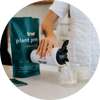
True Protein Sleep is a melatonin-free, night-time formula that brings several of these ingredients together in one 10g serve. Each serve contains 3g glycine, 200mg L-theanine, 480mg tart cherry powder, 500mg taurine and 1.84g magnesium citrate, plus 3g collagen hydrolysate, vitamin C and zinc.
Mix it with water in the evening as part of your wind-down routine. It comes in a Tropical or Mixed Berry flavour, so it feels more like a ritual than a chore. It also comes in Natural if you prefer that.
Can you take Sleep and Magnesium+ together?
Yes, but space them out. Sleep already contains a meaningful dose of magnesium, so take Magnesium+ in the morning or around midday, and save Sleep for the evening.