


Legs heavy by the 10km mark? 5 signs your summer runs need electrolytes
Your summer runs feel harder for a reason. On long, hot runs you sweat out salt as well as water, and water alone can’t put it back.

Saturday's long run starts at 6am to beat the heat. By the 10km mark the sun is over the trees, your bottle is empty and your legs feel heavier than the pace says they should.
The salt in sweat is mostly sodium, with smaller amounts of potassium and magnesium. On short runs the loss hardly matters. On long, hot ones it adds up. Here are five signs your runs need electrolytes.
Your pace drops after the first hour, even on easy ground
If you start strong but fade once you pass the hour, fluid and salt losses may be part of the reason. Australia's food standards use 60 minutes of sustained, strenuous activity as the benchmark for when an electrolyte drink is designed to be used. That covers most long runs, tempo sessions in the heat and trail runs with big climbs.
Try this
Plan a loop past your car or a tap with a pre-mixed electrolyte bottle waiting, so you don't have to carry it all.
Your cap and singlet come back crusted with salt
White salt lines mean your sweat is on the salty side. The Australian Institute of Sport lists “salty sweat” and long periods of sweating as situations where electrolyte replacement can be useful.
You finish more than a kilo lighter
Weigh yourself before and after a long run. Each kilogram lost is roughly a litre of sweat. The AIS suggests drinking about 1.2 to 1.5 times that fluid deficit over the next 2 to 4 hours, and says rehydration is more efficient when electrolytes are replaced too.
Drinking more than you sweat carries its own risk. The AIS notes that drinking too much fluid is the main cause of serious exercise-associated hyponatraemia (low blood sodium). Aim to replace what you lose, not to drink as much as possible.
Try this
Weigh yourself before and after three long runs this month. That gives you a rough sweat rate to plan around.
Your sports drink feels too sweet by halfway
Many sports drinks come with more sugar than you need. On an easy long run, that can get too sweet to keep sipping.
If you fuel with gels or chews, you may only need fluid and electrolytes in your bottle. True Electrolyte has 3.1g of carbohydrate per serve, so it isn't a fuel source. Keep your gels if you use them.
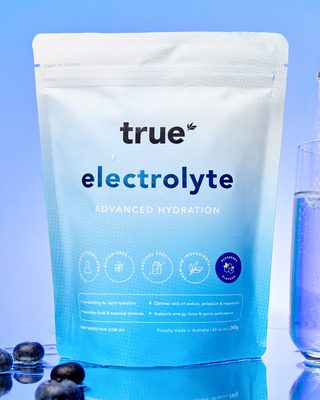
A 400ml serve of True Electrolyte has 1.2g of sugar, less than half a teaspoon. The same amount of a popular full-sugar sports drink has around 23g, nearly 6 teaspoons.*
It comes in Tropical, Lemon Burst, Strawberry and Blueberry. Mix it lighter if you prefer it less sweet.
*Based on the nutrition panels of two leading 600ml sports drinks sold in Australia (5.8–6g of sugar per 100ml), checked October 2026.
You finish hot runs with a headache or feeling washed out
A dull headache, feeling light-headed or feeling flat for the rest of the day can mean you didn't replace enough of what you sweated out. Healthdirect lists headache and dizziness among the signs of mild to moderate dehydration, and names strenuous exercise in hot weather as a common cause. Researchers are still pinning down exactly why dehydration brings on a headache, but the fix is the same: replace what you lost.
For rehydrating, Healthdirect points to drinks that replace salts as well as fluid. Use the before-and-after weigh-in from sign 3 to see how much you're losing.
If it keeps happening, or you feel dizzy, confused or unwell, stop running and see your GP.
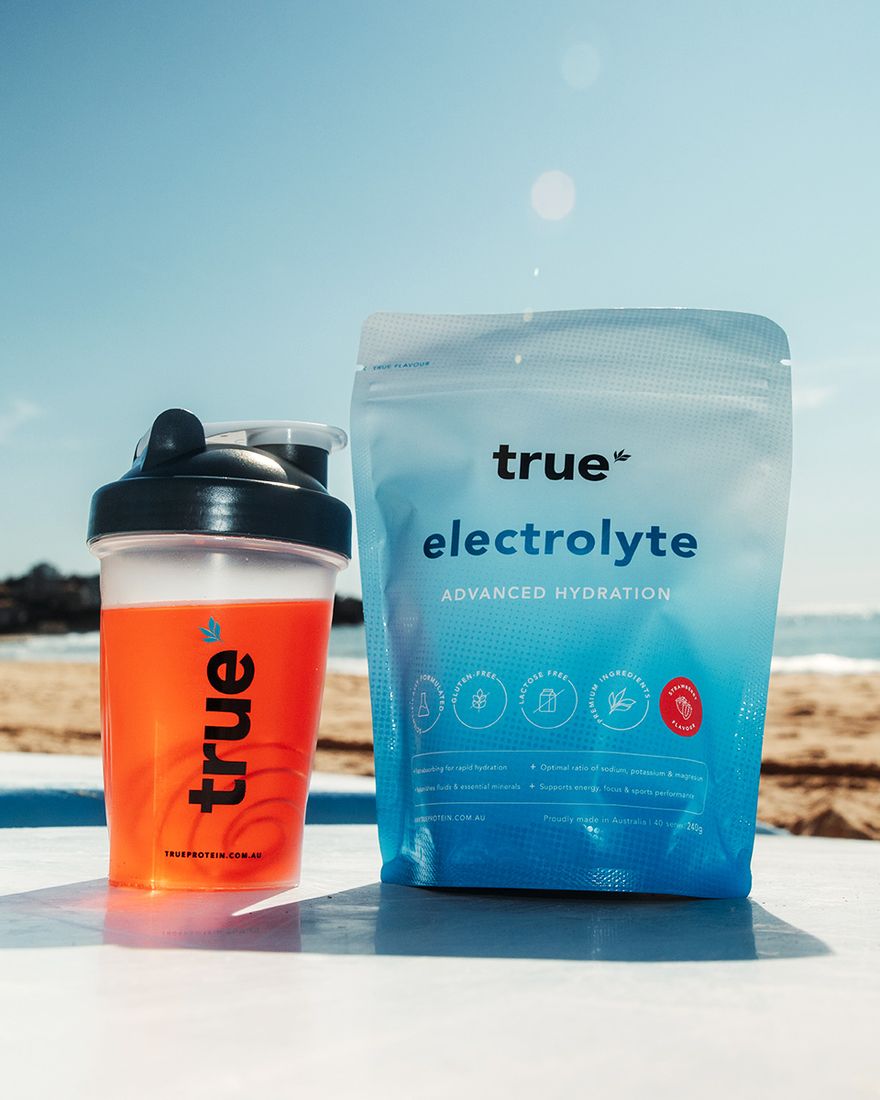
What goes into True Electrolyte
Each 6g serve mixes into 400ml of cold water, and single-serve sachets fit in a run belt. It's made by True Protein in Sydney. Magnesium is necessary for normal electrolyte balance, and each serve provides 19% of the RDI.
- Sodium334mg
- Potassium219mg
- Magnesium60mg
- Sugar1.2g
- CaffeineNone
- Sweetened withStevia and thaumatin
- FlavoursTropical, Lemon Burst, Strawberry, Blueberry
- Pack240g, 40 serves
“Refreshing after a big workout”
“mixing as per instructions its very sweet, so ive diluted it more making it easier to drink quickly while running”
If you have high blood pressure, a heart or kidney condition, or have been told to limit salt, check with your GP before adding electrolyte drinks.
Sort your hydration for summer long runs
True Electrolyte Travel Pack: 12 single-serve 6g sachets in assorted flavours. Each one fits in a run belt.
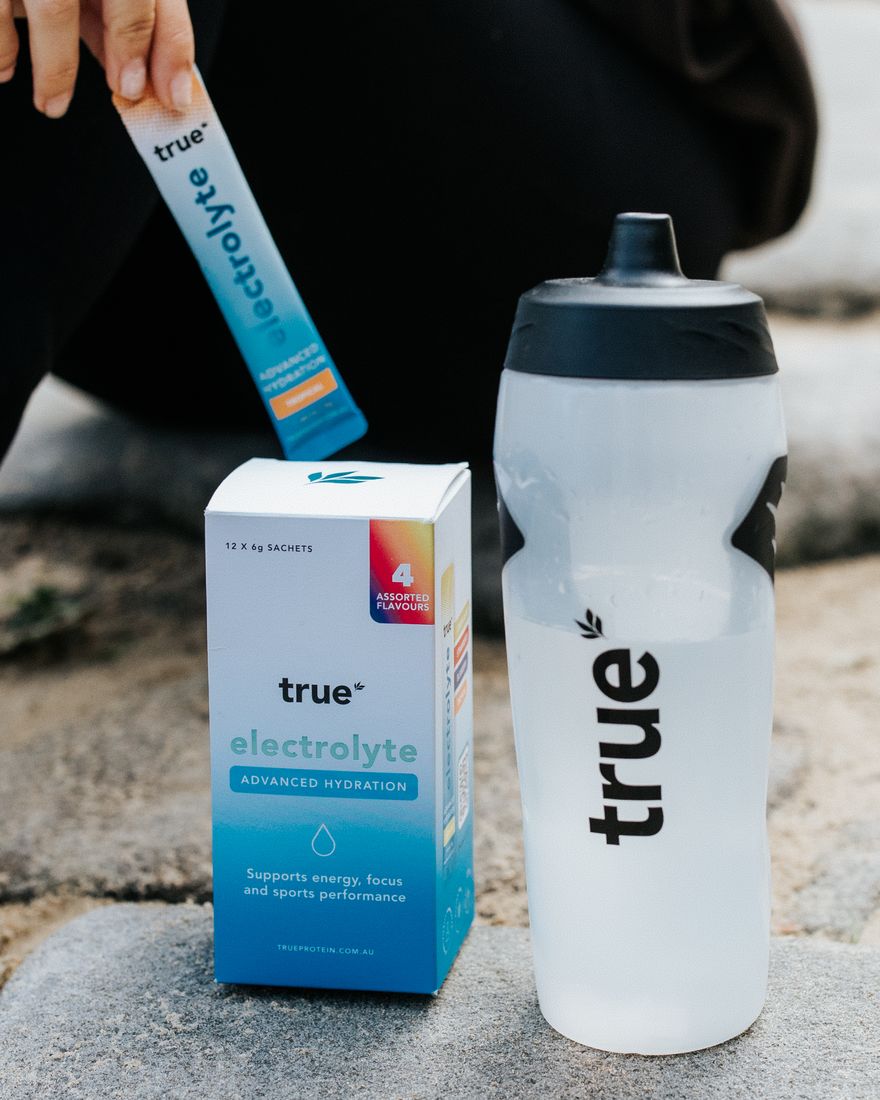
$30
Found your flavour? The 240g pouch has 40 serves for $45.
Frequently Asked Questions
Do I need electrolytes for parkrun?
Usually not. For a 5km run, water is enough. Electrolytes are most useful on runs of an hour or more, especially in the heat.
Should I drink it before, during or after a run?
During long runs in the heat, and afterwards when you've finished noticeably lighter. The AIS suggests replacing 1.2 to 1.5 times your fluid deficit over 2 to 4 hours after exercise.
Can it replace my gels?
No. With 3.1g of carbohydrate per serve, it's for fluid and electrolytes, not fuel. A sports dietitian can help you plan race-day fuelling.
Why is there sugar in the formula?
We include a functional amount of glucose (dextrose and cluster dextrin) to unlock active transport. These carbohydrates act as a “key” to the SGLT-1 transporter in your gut, pulling water and electrolytes into your bloodstream significantly faster than a sugar-free drink could. At 3.1g of carbohydrate per serve (1.2g of it sugar), it’s not there for sweetness. It’s there for hydration speed.
Will True Electrolyte upset my stomach?
True Electrolyte is a hypotonic solution, which supports optimal gastric emptying. That makes it gentle on the stomach, so you don’t feel full or heavy and can focus on performing at your peak.
Can I drink too much?
Yes. Drinking far more than you sweat can lower your blood sodium, which is dangerous. Use your before-and-after weight to guide how much you drink, rather than drinking as much as possible.
I compete in a tested sport. Is there a HASTA version?
Yes. HASTA Electrolyte is batch-tested for banned substances and costs $50.
Can I have it while pregnant or breastfeeding?
It isn't recommended during pregnancy or breastfeeding. Talk to your GP or midwife about staying hydrated during this time.
New to True?
Get exclusive offers, sales and nutrition tips in your inbox.
By signing up you agree to receive emails from True Protein. Unsubscribe anytime. See our privacy policy.