


Tired all day but wide awake at 3am? 5 evening habits to help you switch off
Running on empty by mid-afternoon, then lying awake in the small hours? It's a common pattern. Here are five small changes to your evening that can help your mind slow down at night, and what the research does and doesn't say about them.
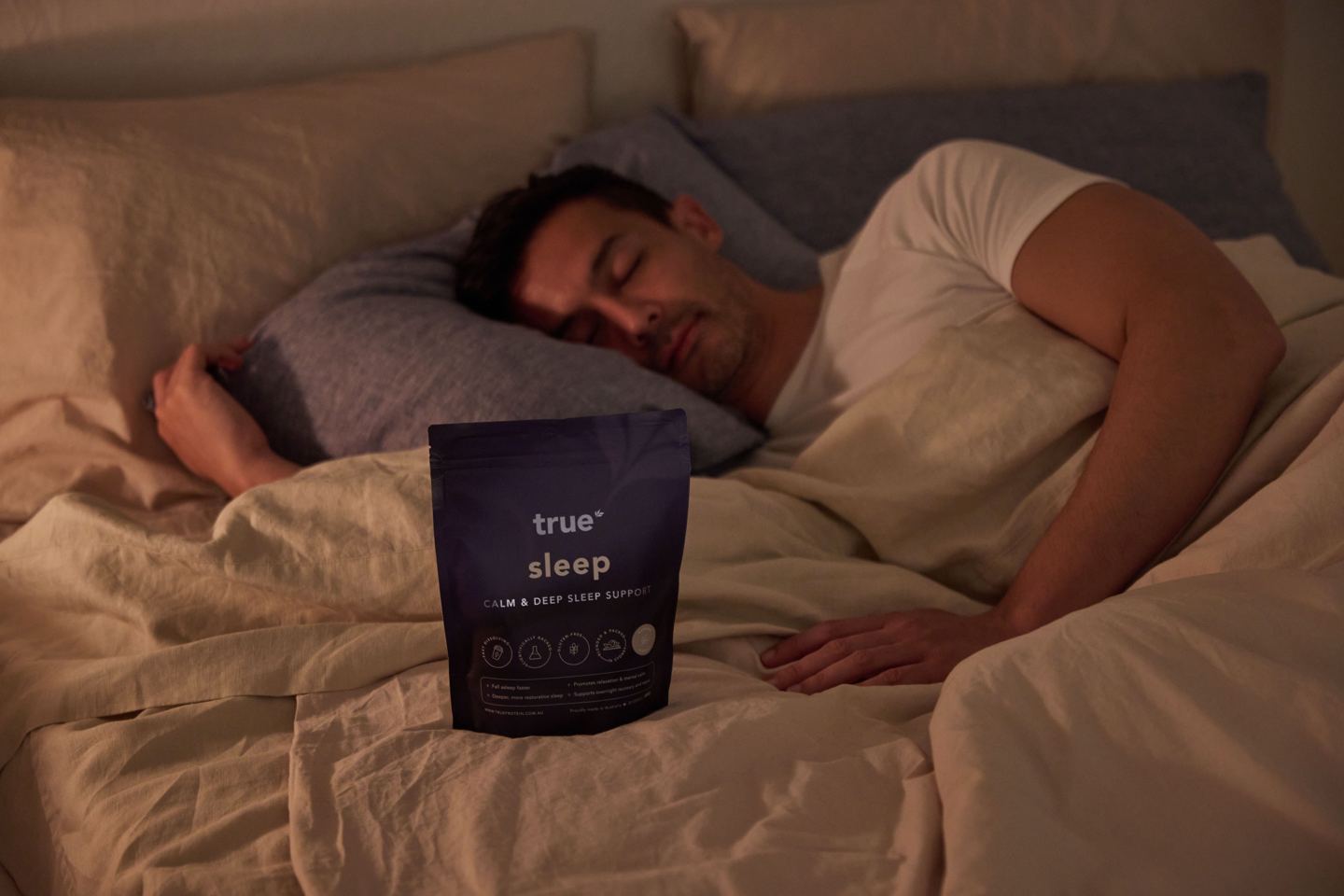
It's 3am. You were flagging by 3pm and could barely keep your eyes open on the couch. Now you're wide awake, running through tomorrow's to-do list.
It often happens when busy days run straight into bedtime. Your body is tired, but your brain hasn't had the signal that the day is over. There's no single fix for that, but your evening is the part of the day you can change.
These five habits are a good place to start. If you're regularly waking in the night, it's also worth a chat with your GP.
Give your evening an “off” switch
If the last thing you do before bed is answer emails, your brain gets no chance to shift down. A regular wind-down tells your body the day is done: dim lights, a warm shower, a book and the same bedtime most nights.
The routine matters more than any single step in it. Doing the same few things in the same order each night is what turns them into a cue.
Try this
Set an alarm for 45 minutes before bed. When it goes off, make a warm or calming drink and put your phone on the charger outside the bedroom.
Move your last coffee to before lunch
That 3pm coffee can feel like the only thing getting you through the afternoon. But caffeine can stay in your system well into the evening, which makes it harder to switch off when you finally get to bed.
It's one of the simplest changes on this list, and one of the easiest to test for yourself over a week or two.
Try this
For the afternoon slump, try a short walk outside or a glass of cold water instead. If you love the ritual, switch to decaf after midday.
Rethink what's in your evening drink
A glass of wine can feel relaxing, but alcohol tends to disrupt sleep later in the night. A non-alcoholic evening drink keeps the ritual without that trade-off, and two amino acids are worth knowing about.
L-theanine is found naturally in tea. In a small four-week trial, healthy adults who took 200mg a day reported lower stress and anxiety scores, and some sleep measures improved compared with placebo.
Glycine is made by your body and found in protein foods. In a small Japanese study, people unhappy with their sleep who took 3g before bed reported better sleep quality.
Both studies were small, so treat them as promising rather than proven.
Check you're getting enough magnesium
Magnesium contributes to normal psychological function and to a reduction of tiredness and fatigue. It's also necessary for normal nerve and muscle function.
Food comes first. Leafy greens, legumes, nuts, seeds and wholegrains are the main sources, and they're often the first foods dropped on a busy day. A 2017 review of 18 studies found some evidence magnesium may help how people feel under stress, but rated that evidence as poor quality. A top-up is most likely to matter if your diet falls short.
Try this
Add one magnesium-rich food to dinner: a handful of spinach, a tin of chickpeas or a sprinkle of pumpkin seeds.
Don't train hard every single day
Training is good for you, and recovery is where it pays off. The trouble starts when hard sessions stack up with no easier days in between, especially when sleep is already short.
A late, intense session can also leave you feeling buzzed at bedtime.
Try this
Plan at least one easy or rest day between your two hardest sessions each week, and keep your hardest workouts earlier in the day where you can.
How True Sleep brings these together in one nightly glass
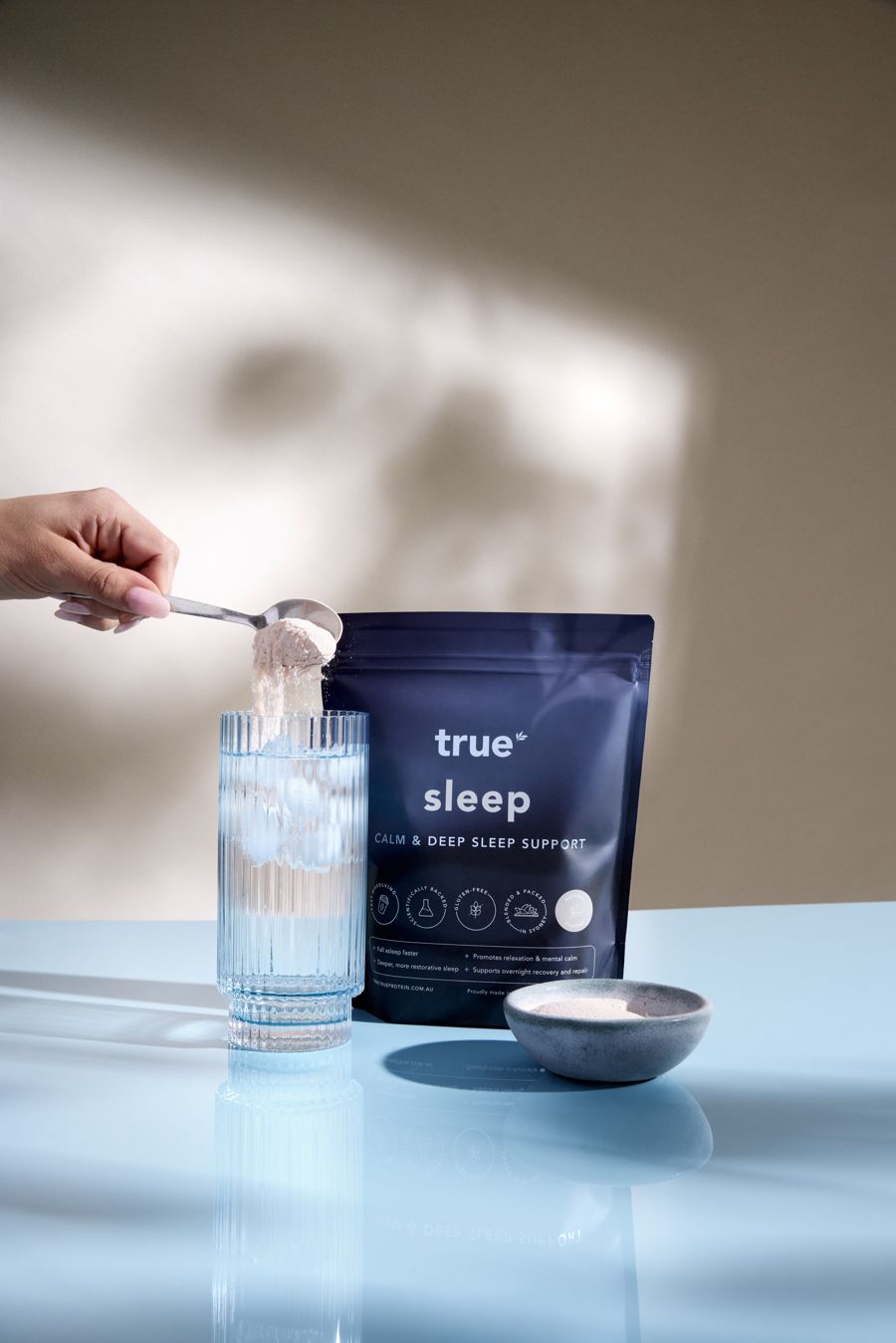
If you'd like a simple way to build habits 1, 3 and 4 into your evening, this is why we made True Sleep. It's a drink you mix 30 to 60 minutes before bed, so it can become the cue that starts your wind-down.
Each serve has the same 200mg of L-theanine and 3g of glycine used in the studies above, plus up to 389mg of magnesium. It isn't a sedative, and it works best alongside the other habits on this list, not instead of them.
What's in each 10g serve
Mix 2 level teaspoons into 150 to 200ml of water. Have no more than one serve a day. Zinc contributes to normal cognitive function.
- L-theanine (AlphaWave®)200mg
- Glycine3g
- Magnesium (citrate)389mg, 121% RDI (Natural)
276mg, 86% RDI (flavoured) - Collagen peptides3g
- Taurine500mg
- Montmorency tart cherry480mg
- Vitamin C79mg, 198% RDI
- Zinc7mg, 56% RDI
- FlavoursNatural, Tropical, Mixed Berry
- Pack300g, 30 serves. Made in Sydney.
“This stuff is next level, because, ah, it actually works.”
“Have a great sleep, thanks True”
The studies above tested single ingredients, not True Sleep as a blend. If you're feeling constantly stressed or exhausted, or your sleep problems keep going, see your GP.
Frequently Asked Questions
Will Sleep stop me feeling stressed?
No supplement can promise that. Magnesium contributes to normal psychological function and to a reduction of tiredness and fatigue. A regular bedtime, caffeine timing and rest days have a bigger effect on how you feel day to day.
Is Sleep a sedative?
No. It's designed as a nightly drink to support your wind-down, not to knock you out.
When should I take Sleep?
30 to 60 minutes before bed. Mix 10g (2 level teaspoons) into 150 to 200ml of water, and have no more than one serve a day.
Can I take Sleep with Magnesium+?
Both contain magnesium and zinc, so space them out. Have Magnesium+ in the morning or at lunch and Sleep at night. If you take other magnesium or zinc supplements, or any medication, check with your GP or pharmacist first.
Is Sleep vegan?
No. It contains collagen, so it isn't suitable for vegans or vegetarians. Gluten and lactose are nil detected. It's made in a facility that handles dairy and nuts.
What if I'm still not sleeping well?
Sleep isn't a replacement for good sleep habits. If your sleep problems keep going, talk to your GP or a healthcare professional.
New to True?
Get exclusive offers, sales and nutrition tips in your inbox.
By signing up you agree to receive emails from True Protein. Unsubscribe anytime. See our privacy policy.